
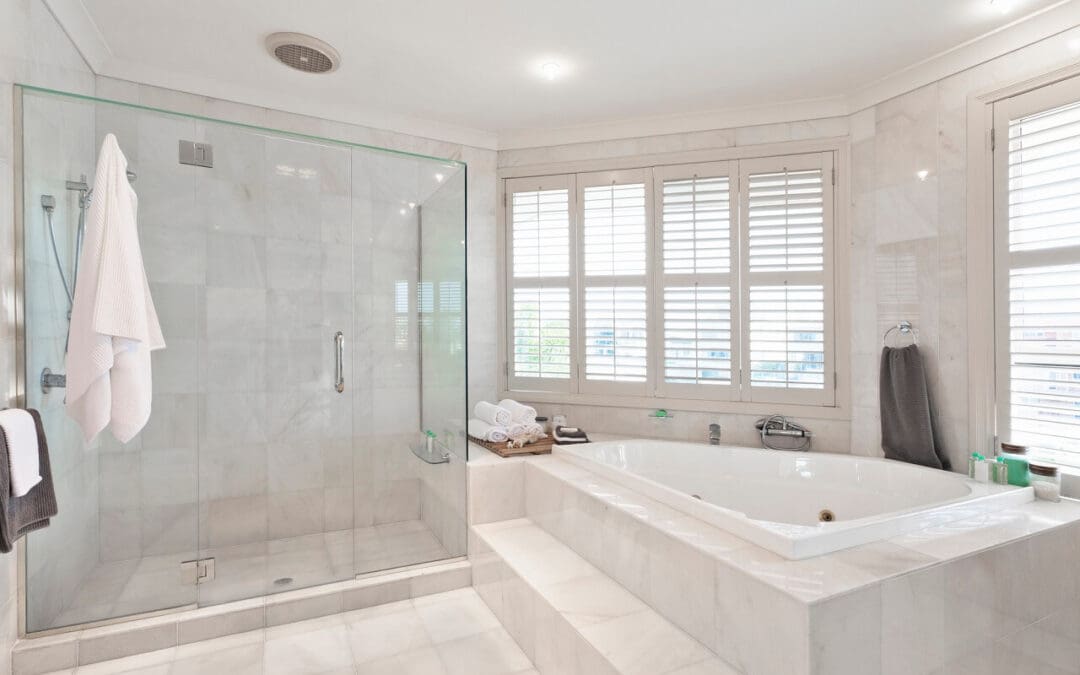
Bathroom flooring has more demands placed on it than any other floor in the home. It has to handle consistent moisture exposure, standing water, cleaning products, and bare feet on cold mornings, while also contributing to the aesthetic of one of the most evaluated rooms in any home. The material that works best isn’t necessarily the most beautiful or most expensive one; it’s the one that performs at the level the bathroom requires while meeting the homeowner’s practical and aesthetic goals. Understanding how the most common options compare on slip resistance, moisture tolerance, comfort underfoot, and maintenance is what makes the selection a confident one rather than a guess based on appearance alone.
The Bathroom Flooring Standard for Good Reason
Ceramic and porcelain tile are the bathroom flooring materials most consistently recommended by contractors and designers because they address the bathroom’s core challenges more comprehensively than any alternative. Both are waterproof, highly durable, and available in an enormous range of sizes, colors, and finishes, but porcelain is denser, harder, and more moisture-resistant than ceramic, making it the bathroom flooring choice that performs best in high-moisture applications and holds up longest under heavy use. Smaller format tiles with more grout lines provide more natural slip resistance than large-format tiles on a wet floor, which is worth considering when selecting tile size for a shower floor or a bathroom without a bath mat. The slip resistance of tile is determined by its surface texture and coefficient of friction rating. Bathroom tile should carry a minimum COF rating of 0.5 for wet environments, which rules out the highly polished finishes that look striking in showrooms but become hazardous when wet.
The Flooring Option That Has Changed the Market
Luxury vinyl plank (LVP) and tile (LVT) have become the bathroom flooring materials most homeowners consider alongside tile because they solve tile’s two most consistent limitations: cold underfoot and grout maintenance. Modern luxury vinyl is 100 percent waterproof, warmer and more comfortable underfoot than tile, and available in wood and stone looks convincing enough to pass a casual visual inspection. The bathroom flooring installation process for luxury vinyl is also significantly simpler than tile, most products click together without adhesive and can be installed directly over an existing floor in good condition, reducing both cost and installation time considerably. Luxury vinyl does have a heat tolerance limitation, very hot water spilled repeatedly on the surface or radiant heat systems running at high temperatures can affect the material over time, which is worth confirming with the manufacturer before installation over a heated subfloor system.
Bathroom Flooring That Requires Extra Consideration
Natural stone, like marble, travertine, and slate, produces the most dramatic bathroom flooring visual result and the most consistent maintenance requirement. Stone requires sealing on installation and periodic resealing throughout its life to prevent moisture absorption, staining, and etching from acidic cleaning products and hard water. Softer stones like marble and travertine are more vulnerable to both etching and physical wear than harder options like slate or quartzite, making the stone selection within this category as important as the decision to use natural stone at all. Hardwood is not recommended as a bathroom flooring material in most applications because wood expands, contracts, and deteriorates with the moisture cycling that bathrooms produce, engineered hardwood with a waterproof core is a more viable option in powder rooms with limited moisture exposure, but remains a risk in full bathrooms with showers or tubs.
AmeriSpec Inspection Services offers home inspections in Southwest Ohio and Northern Kentucky. Contact us to schedule your appointment today.